1. Introduction
When FTX collapsed in November 2022, it emerged that the exchange had used client funds for its own investments. Proof of Reserves has become the industry standard to prevent this from happening again: exchanges cryptographically prove that they hold reserves greater than or equal to their total client liabilities.
But not every Proof of Reserves is equal. There are big differences in frequency, technology and coverage. On this site we compare these factors objectively.
2. What exactly is Proof of Reserves?
Proof of Reserves (PoR) is cryptographic evidence that an exchange holds sufficient assets to cover all of its client liabilities. Concretely:
- Reserves = what the exchange holds (wallets, custody)
- Liabilities = what the exchange owes to clients (your balance)
If reserves are greater than or equal to liabilities for every asset, the exchange is solvent. Proof of Reserves proves this without clients having to reveal their individual balances.
Continue reading the article
3. How does it work technically?
The basic flow:
- Snapshot of all client balances (per asset)
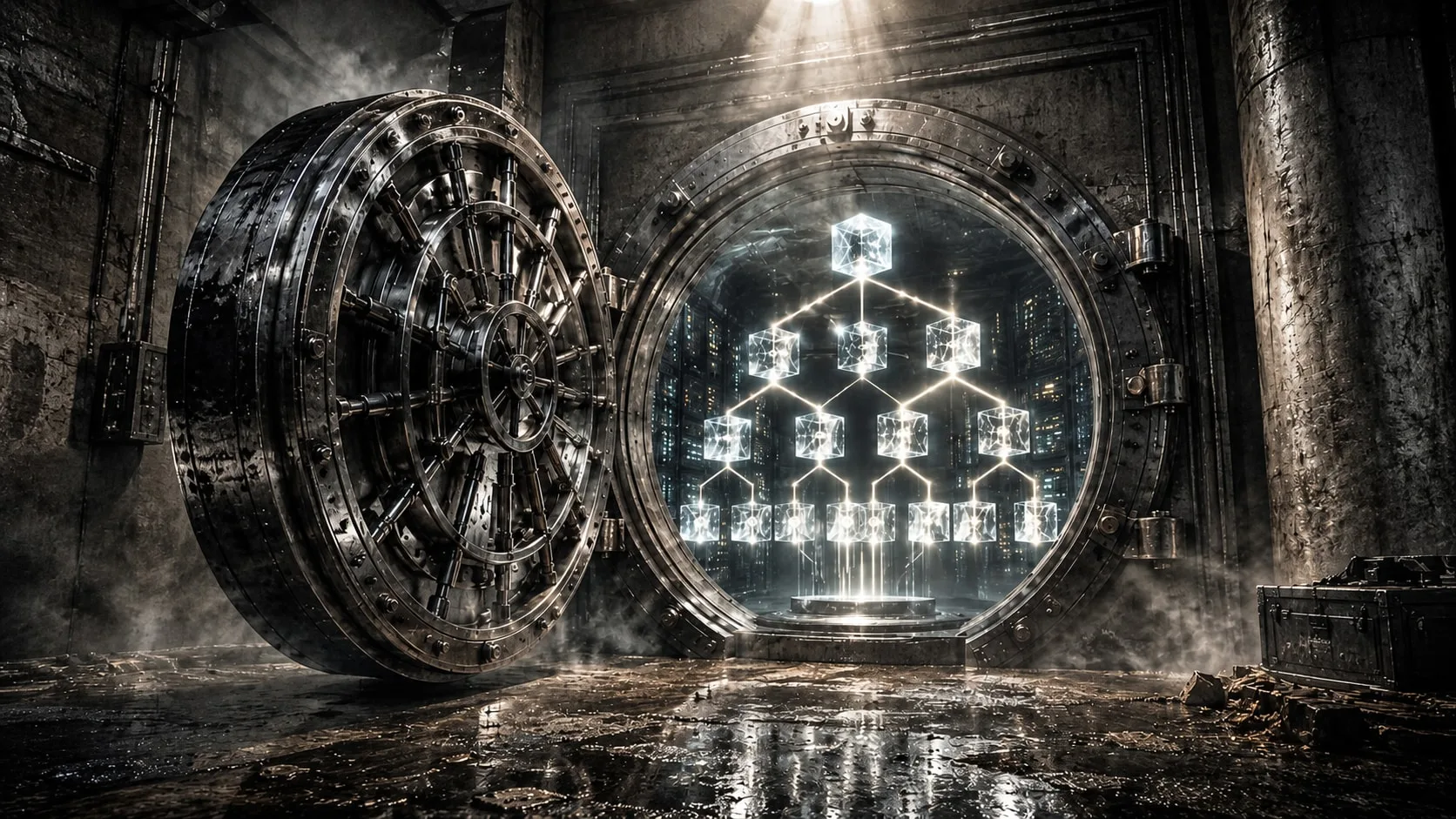
- Merkle tree construction — each client gets a hash
- Wallet addresses are shared publicly
- Independent verification — anyone can check the wallet balances against the Merkle root
An individual client can verify their own balance without other balances becoming visible. That is the strength of this approach.
4. The different technologies
There are three generations of Proof of Reserves technology:
1. Merkle Tree (basic)
- Client balances are hashed into a tree structure
- Public wallet addresses are shown
- Every client can verify whether their balance is included
- Criticism: an exchange can "hide" negative balances (previously done at FTX)
2. zk-SNARKs / zk-STARKs
- Cryptographic proof that all balances are positive
- Impossible to hide negative balances
- Requires more computing power
- Advantage: higher assurance, harder to manipulate
3. Plonky2 / recursive ZK proofs
- Newest generation
- Faster verification, smaller proof size
- Supports higher frequencies (daily instead of monthly)
- Advantage: privacy-preserving and verifiable in real time
5. What is proven (and what is not)?
An important nuance: Proof of Reserves does not prove everything.
Proven:
- Total asset holdings greater than or equal to total liabilities per asset
- Individual client balances included in the proof
- Public wallet addresses contain the reported balances
Not proven (often):
- What happens between two snapshots (with monthly PoR = 30 blind days)
- Margin positions (with spot-only PoR)
- Unrealized PnL (losses on open positions)
- Off-chain assets (institutional deals, other parties)
- Obligations to third parties outside of clients
These points make frequency, coverage and scope crucial. A 30-day-old snapshot of only BTC and ETH proves little if an exchange supports 100+ coins.
6. Frequency: daily vs monthly vs quarterly
The frequency at which an exchange publishes PoR determines how up to date the proof is:
- Daily — the newest standard, possible since recursive ZK proofs
- Monthly — the current industry norm since FTX
- Quarterly — accepted at traditionally regulated platforms with external audits
- Never — a major red flag
The difference in practice: with a daily PoR, the chance that an exchange commits fraud between two proofs is minimal. With quarterly you have a 90-day "black box" between verifications.
7. Comparison of major exchanges
| Exchange | Frequency | Technology | Coverage | Details |
|---|---|---|---|---|
| Backpack | Daily (internally every 10 min) | Plonky2 ZK proofs (PoRv2) | Spot + Margin + Unrealized PnL — all assets | Daily public ZK-verified proofs since Aug 2025. Monitored by OtterSec. Open-source. |
| OKX | Monthly | zk-STARK / Merkle Tree | 22 coins incl. BTC, ETH, USDT, USDC | 42nd report (Apr 2026). Reserve ratios 100-110%. |
| Bybit | Monthly | Merkle Tree | Major assets | 31st report as of early 2026. Consistent monthly cadence. |
| Binance | Monthly | Merkle Tree / zk-SNARKs | Major assets | Monthly PoR. Has faced methodology criticism. |
| Kraken | Quarterly | Independent audit | 7 assets | Third-party audits by The Network Firm. Strong regulatory reputation. |
| Bitvavo | Quarterly | Independent attestation | 13 assets | Quarterly attestations. Dutch-regulated (DNB). |
Notable observations:
- Only one exchange publishes daily public ZK proofs
- Only one exchange covers all assets in the proof (not just majors)
- Only one exchange also proves margin + unrealized PnL, not just spot balances
- Kraken and Bitvavo use external audits, but quarterly = 90 blind days
- OKX has the most mature monthly cadence (42 reports)
8. What does this mean for you?
For most retail users, Proof of Reserves is not a top-of-mind topic. But if you hold balances above €10,000 or have significant open positions, it matters.
Questions to ask:
- How often does the exchange publish PoR? (daily > monthly > quarterly)
- Which assets are covered? (all > majors > a few)
- Are margin and unrealized PnL included? (important for perpetuals traders)
- Is the code independently monitored? (e.g. OtterSec, The Network Firm)
- Is the PoR code open-source verifiable?
Red flags: no PoR on the website; only a monthly Merkle Tree without ZK proof; limited asset coverage; external audits without cryptographic proof.
Green flags: daily public ZK proofs; full asset coverage; inclusion of margin and unrealized PnL; independent security monitoring; open-source code.
Proof of Reserves proves that an exchange holds enough reserves at a snapshot moment to cover client funds, but not what happens between two measurements. Its value depends on frequency, technology and coverage: daily ZK proofs across all assets say far more than a monthly Merkle Tree of only the majors. See it as an important signal, not a full guarantee.
Frequently asked questions
Is Proof of Reserves enough to trust that my money is safe?
It is an important signal, but not complete. Always combine it with licences (MiCA, MiFID II), custody structure and operational history.
What happens between two PoR publications?
With daily PoR: minimal risk. With monthly: a 30-day "black box". With quarterly: 90 days.
Can an exchange commit fraud with PoR?
With older Merkle Trees this was possible (hiding negative balances). Modern ZK proofs rule this out by cryptographically proving that all balances are positive.
Does PoR replace an audit?
No — PoR is a real-time cryptographic proof. Audits look wider (e.g. corporate structure, off-chain assets). Both have value.
I want to verify my own balance — how?
Most exchanges with PoR offer a verification tool where you can enter your account ID and cryptographically prove that your balance is included.